.svg)

.svg)
.svg)
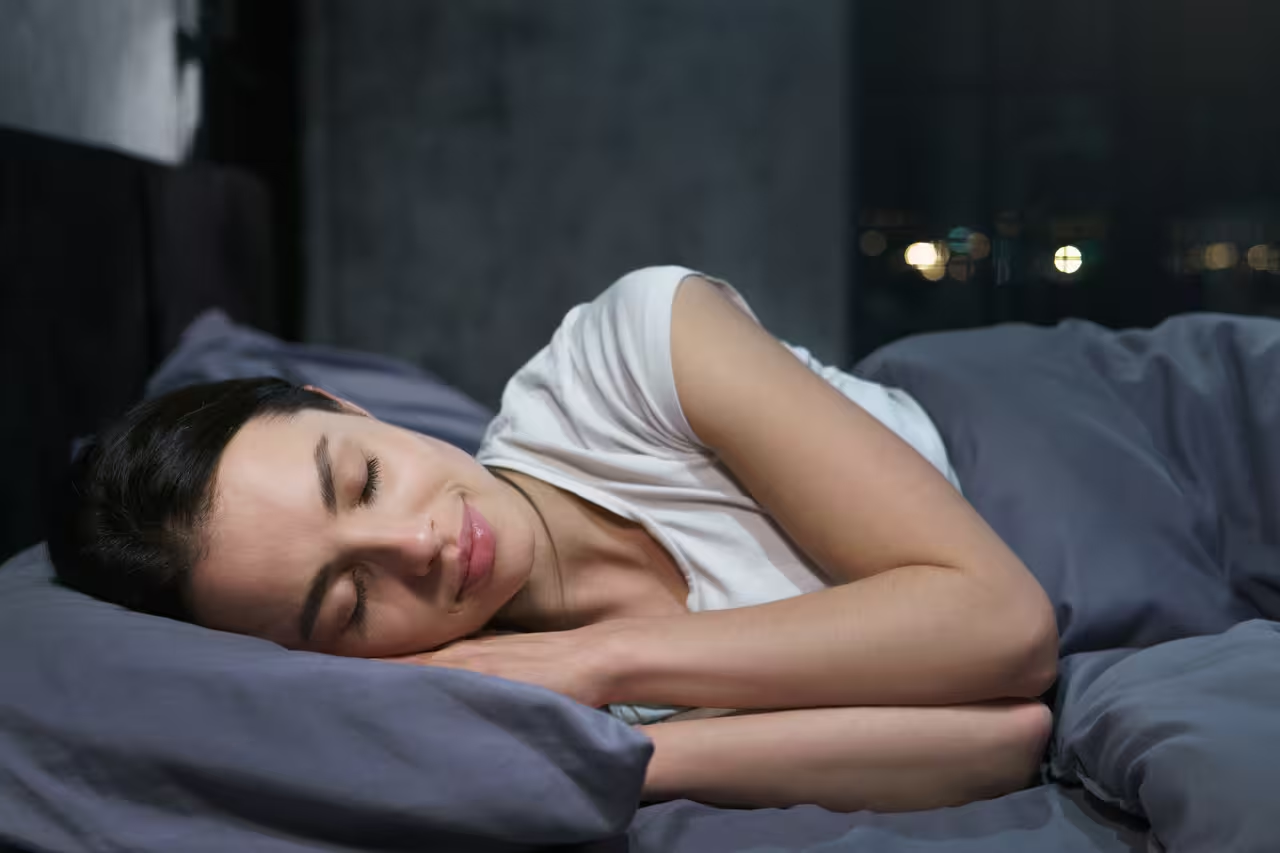

You know the routine. The mask goes on. The straps get adjusted, then readjusted. The machine hums to life, and you try to fall asleep with a hose taped to your face and a stranger's idea of what "restful sleep" is supposed to feel like.
For many people, CPAP works. For a lot of others, it doesn't, not because the science is wrong, but because the experience of actually using it every single night is more than they can sustain. Masks that leak. Skin irritation. A partner who can't sleep next to the noise. A suitcase that suddenly needs its own compartment for travel. Eventually, the machine ends up in a closet, and the sleep apnea it was meant to treat goes right back to untreated.
If any of this sounds familiar, there's something worth knowing: CPAP is not the only path to treating sleep apnea. For many patients, a custom oral appliance offers real, measurable relief, without the mask, the noise, or the nightly negotiation.
Why CPAP Doesn't Work for Everyone
CPAP (continuous positive airway pressure) is often the first treatment recommended for obstructive sleep apnea, and for good reason. It works by delivering pressurized air through a mask, keeping the airway open throughout the night. When it's used consistently, it's highly effective.
The problem is that "used consistently" is doing a lot of work in that sentence. Studies on CPAP adherence have found that a significant portion of patients struggle to use the device as prescribed, and many stop using it altogether within the first year. The reasons are almost always practical, not medical: the mask feels claustrophobic, the air pressure is uncomfortable, the noise disrupts a partner's sleep, or the entire setup simply feels incompatible with normal life.
None of this means CPAP has failed as a treatment. It means the delivery method doesn't work for every person, and when it doesn't, the sleep apnea underneath it is still there, still untreated, still carrying real health risk.
What an Oral Appliance Actually Does
An oral appliance takes a different approach entirely. Rather than forcing air through the airway, it works by gently repositioning the lower jaw slightly forward during sleep. This subtle shift helps keep the airway open by preventing the soft tissue at the back of the throat from collapsing, which is the underlying cause of obstructive sleep apnea in the first place.
The appliance itself is a custom-fabricated device, worn like a retainer or mouthguard, that fits your mouth precisely. There's no machine, no mask, no hose, and no noise. You put it in before bed, and it does its work quietly while you sleep.
For patients who are CPAP-intolerant, or who simply never got past the first few nights of trying, this is often the first sleep apnea treatment that actually gets used consistently, because it's the first one that doesn't feel like a nightly ordeal.
Is an Oral Appliance Right for You?
Oral appliance therapy tends to be most effective for mild to moderate obstructive sleep apnea, and it's a particularly strong option for patients who are CPAP-intolerant regardless of severity. A sleep study is typically the starting point, since it confirms the diagnosis and severity, which then informs whether an oral appliance is an appropriate primary treatment or a helpful addition to your care.
If you've already been diagnosed with sleep apnea and have a CPAP machine sitting unused, you likely don't need to start over from scratch. Bringing your existing sleep study results to a consultation is usually enough to begin evaluating whether an oral appliance makes sense for you.
Signs that an oral appliance may be worth exploring:
- You've been diagnosed with sleep apnea but can't tolerate CPAP
- You snore heavily and a partner has noticed pauses in your breathing
- You wake up feeling exhausted despite spending enough hours in bed
- You've tried CPAP multiple times and the machine now sits unused
- You travel frequently and want a treatment option that doesn't require carrying equipment
What to Expect
At The Hills Dental Spa, oral appliance therapy is one part of a broader approach to airway and sleep health led by Dr. Kevin Winters, who brings a neuromuscular perspective to how the jaw, airway, and sleep quality connect. Rather than treating sleep apnea as an isolated issue, the evaluation considers how your bite, jaw position, and airway anatomy work together, which often leads to a more comfortable and effective fit than a generic appliance would.
The process itself is straightforward. After reviewing your sleep study and discussing your history, impressions or digital scans are taken to fabricate an appliance custom-built for your mouth. Most patients adjust to wearing it within a short period, and many describe it as far more tolerable than they expected, especially compared to their experience with CPAP.
The goal isn't just a quieter night. It's addressing the pauses in breathing that place real strain on your heart, your blood pressure, and your long-term health, in a way that you'll actually stick with.
.avif)
.avif)
You Don't Have to Choose Between Treatment and Tolerability
Untreated sleep apnea carries genuine risk, but so does a treatment you can't bring yourself to use night after night. If CPAP has become something you dread rather than something you rely on, it's worth having a conversation about what else is available.
We welcome patients from Austin, West Lake Hills, Rollingwood, Lost Creek, and Lakeway, TX, including those who've already been through a sleep study and are simply looking for a better way to manage what it found.
Request an appointment for Sleep Apnea Treatment, or call (512) 347-0044 to discuss whether an oral appliance is right for you.